Learning Mats: World in Motion

Collection of 80 apps

Device: Interaktivna tla · Interaktivna stena · Interaktivna tabela · Personal Computer · Interactive board Control method: Digital Mats App categories: šport in zabava · matematika in logika · jezikovno izobraževanje · ustvarjalnost · kodiranje in algoritmiko · posebne izobraževalne potrebe · družabne in strateške igre · narava in ekologija

License for 1 seat without time limits

License for 1 seat without time limits

Prices for: United States · USD spremeniti

We reply to inquiries within 1 business day — you will receive the quote by e-mail.


Want to buy online right away? It only requires an account: log in or sign up

Online payments: payment card or PayPal. E-mail and quote orders can also be paid by bank transfer. See more information on how to order Motioncube applications.
Icon

Active learning in large format

Large format exercises

WORKING WITH A GROUP

Fun with sets, maps and numbers

MATHS AND SCIENCE

Coding mats, patterns, shapes, colours

CODING AND LANGUAGES

Without sitting at the bench

MOVEMENT ACTIVITIES

Digital product. Props shown in photos and videos are not included.

See sample boards

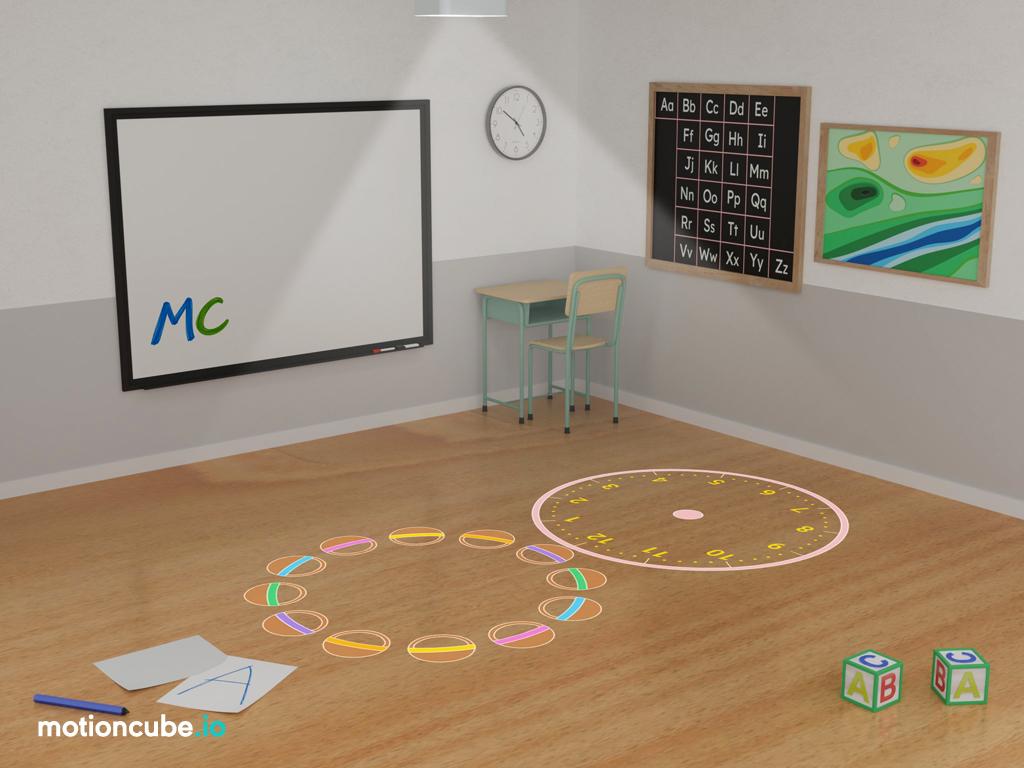
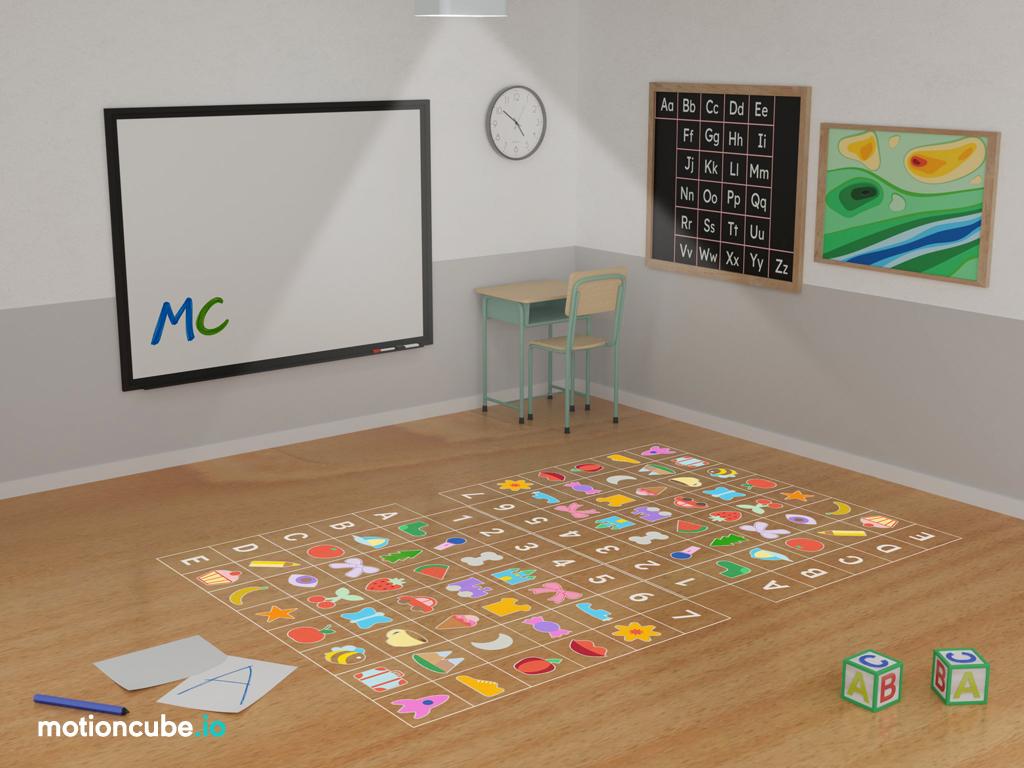
Display the mat and invite children to join in the fun of discovering the world
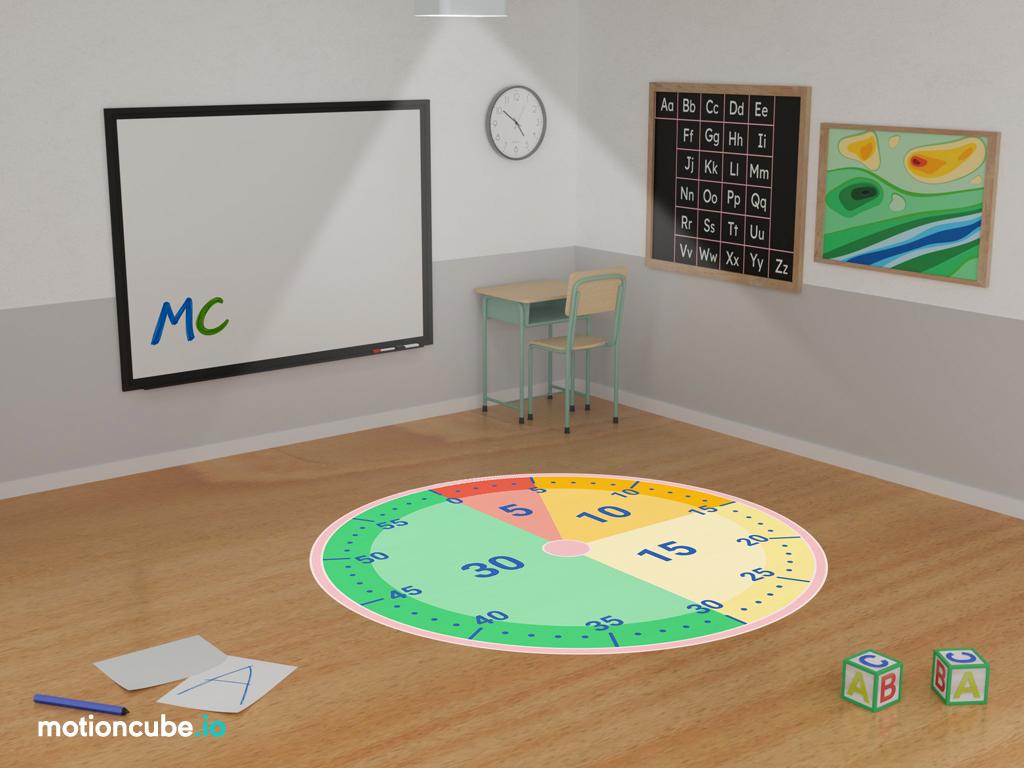
Each educational board allows you to conduct many exercises and combine different fields of science in one scenario. Include additional aids in the game, which children will arrange, combine, divide and group on the board.

How to work with a digital mat?

Directly on the floor

Directly on the floor

All you need is a projector. Launch the app with the mat.

Work with a group

Work with a group

Explain the task, divide the children into teams, observe and support them.

Divide mat into two boards

Divide mat into two boards

Display one large board for all children, or two smaller boards for two groups.

Exercise scenarios

Exercise scenarios

Take advantage of ready-made activity ideas from the included teacher guide.

Use props

Use props

Simple materials (e.g. building blocks, soft toys) will come in handy when working with younger children. Pupils can prepare many of these materials themselves as a way to get the play started.
Student worksheets

Student worksheets

Print out the attached worksheets and use them as extra worksheet activities, for an art project, or as a worksheet to stick in a workbook.

Learn more

This Learning Mats package is designed for pre-school children (aged 3–6) and early-year pupils (Years 1–4). It is suitable for both group sessions and individual work with children. It can be used in nurseries, primary schools, after-school clubs, educational support centres and therapy rooms.
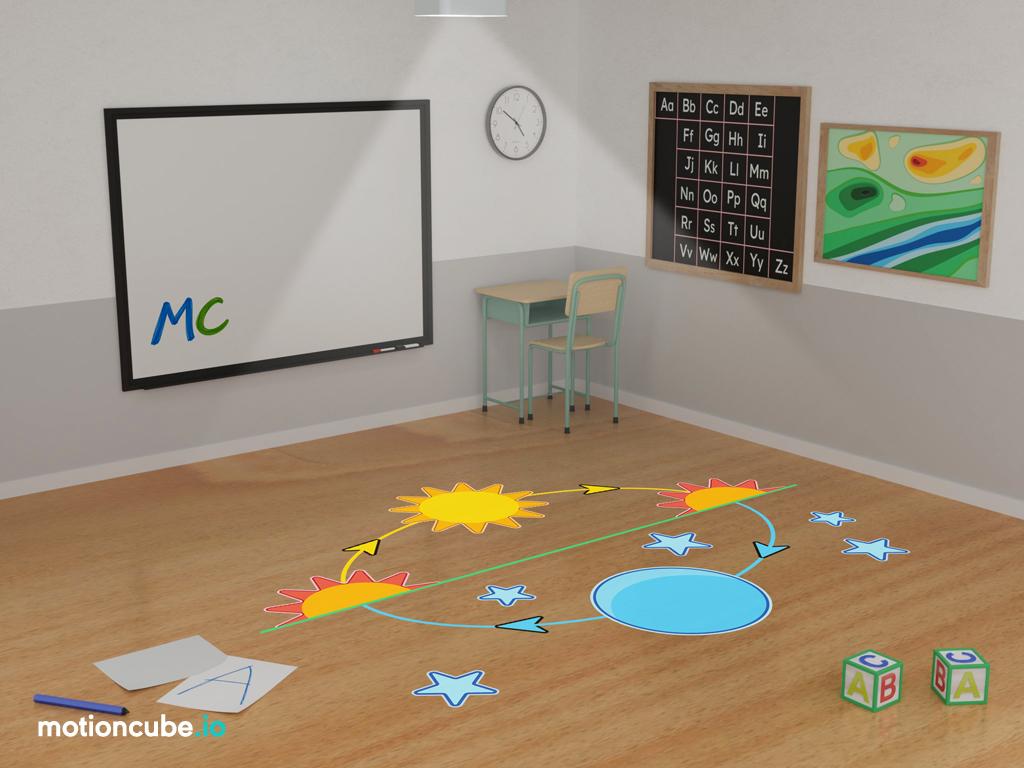
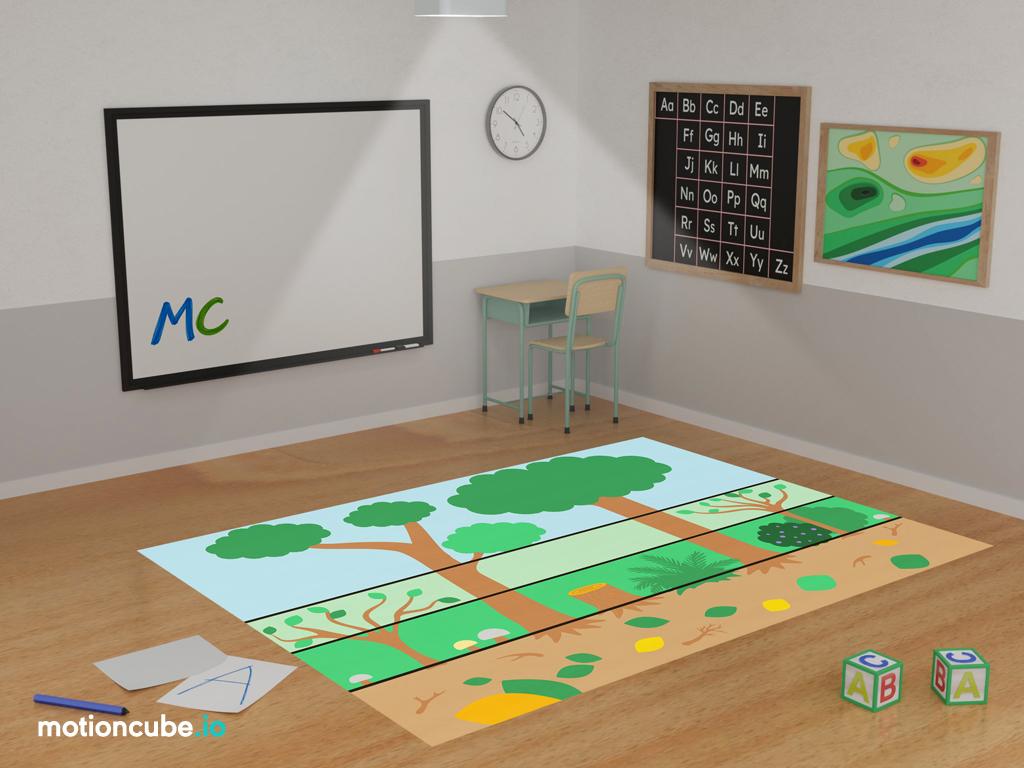
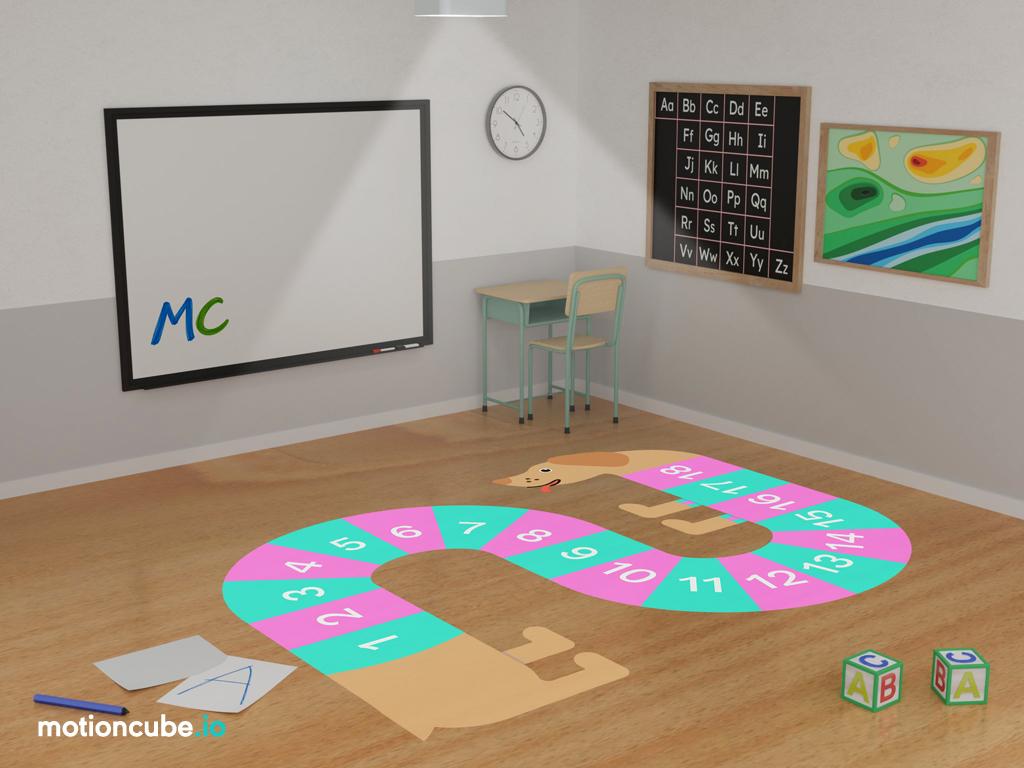
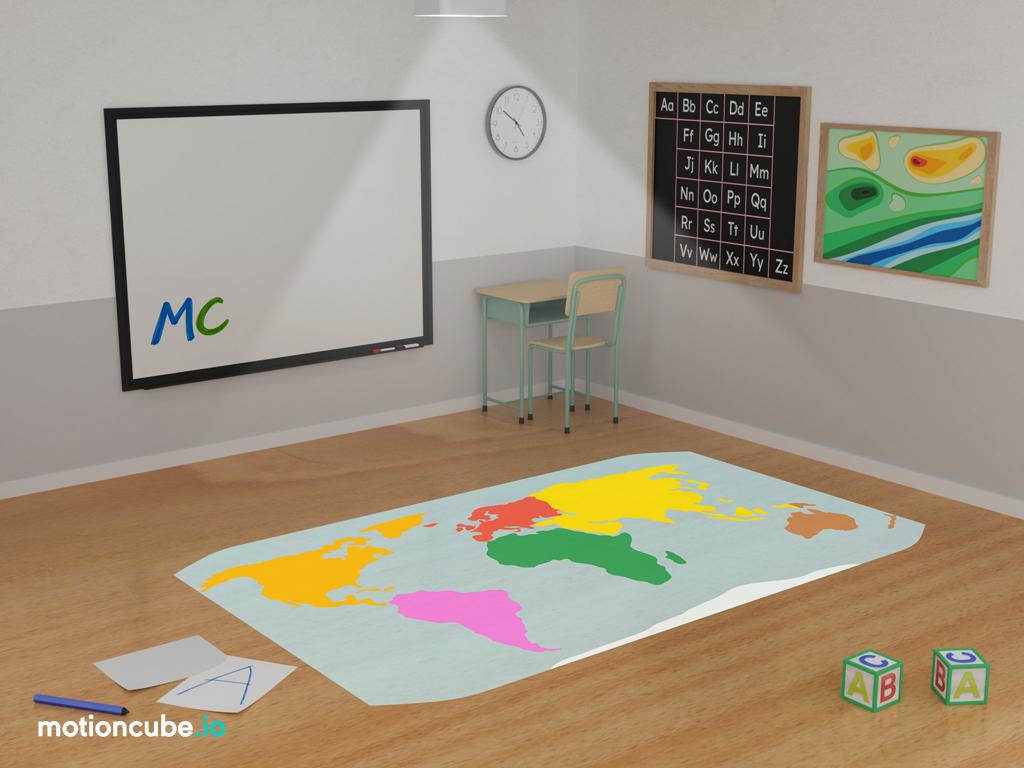
The package includes 180 digital learning mats, organised into 80 themed activities. Digital learning mats are large, display boards that children can walk and jump on freely, and place any props on. Each application consists of one mat or a set of several mats differing in difficulty level, number of elements or layout complexity. The pack includes 180 mat variants in total. Themes covered include mathematics, literacy, science, geography, coding and logic, time and spatial orientation, as well as movement and creative play.
The pack comes with a teacher guide containing ready-made activity plans. For each mat, the guide provides suggested activities and games with estimated duration, recommended group size and a list of optional props - so that lesson preparation takes as little time as possible. The pack also includes printable pupil worksheets, designed either as a standalone desk activity or as a workbook insert, to complement mat-based work and reinforce learning in a traditional written format.
Learning mats serve educational, developmental and general learning objectives. They support the development of mathematical, linguistic and scientific skills in line with the National Curriculum for Pre-school and Early Years Education. Each activity combines movement with thinking – children acquire knowledge and skills through action, hands-on play and group cooperation, which effectively supports long-term learning. Working on the mats naturally develops fundamental competences – mathematical and linguistic – as well as cross-curricular competences: cognitive skills such as critical and creative thinking and problem-solving, as well as social and personal skills, which are developed during every group activity. The educational mats focus on learning through action, developing agency and working in a group. The set can be used as a teaching aid in educational classes, as a form of teaching combined with physical movement, and as a tool to support educational therapy.
You project the apps onto the floor using a projector, creating a large digital mat measuring approximately 2×3 metres. The children work directly on the image – they walk and jump on it, place props on it, and carry out tasks directly on the board. A single application may contain one board or several board variants. The projection mat is static, meaning it does not respond to touch – the teacher leads the session by giving instructions and engaging the group. A remote control or computer mouse, for example, is used to change the board. Your own props – sensory bags, ropes, blocks, pictures – can form part of many exercises and games. The programme also allows the screen to be split into two working areas – you can display two identical boards simultaneously or two different boards for two parallel groups.
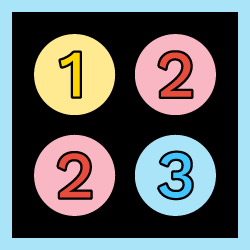
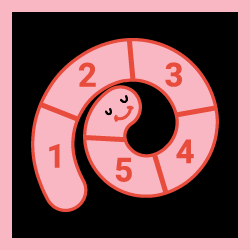
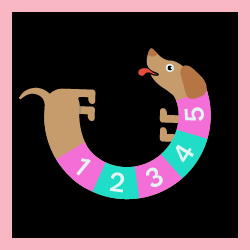
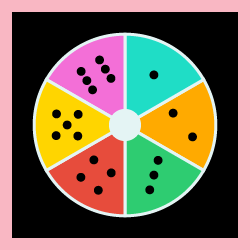
Each application with boards is tagged with subject-specific tags, making it easy to quickly find boards that match the topic being covered in class – e.g. coding, geography, maths, science, time and the calendar, geometry, language and the alphabet, and others. Additional tags – ‘from 3 years’ and ‘from 6 years’ – allow you to immediately narrow down your selection to mats suitable for a specific age group. Browsing is also made easier by visual cues: the icon for each app depicts the mat’s theme – e.g. a thermometer for a mat featuring thermometers – so you can recognise the content straight away. The icons also have coloured borders according to the subject area: blue indicates language and general education mats, pink – maths, i.e. measuring, counting and shapes, green – science and geography, and yellow – coding. Most mats are available in several versions of increasing complexity – the teacher chooses the level appropriate to the age and skills of the group. In the teacher’s guide, the descriptions of each app include sample activities to help with lesson planning.
Most of the activities use simple, readily available materials: sensory bags, string or yarn, building blocks, dice, cards with pictures or numbers, coloured sticks, etc. Some of the activities require no props at all – the children’s bodies and movements are enough. A list of suggested props is provided alongside the description of each activity.
Yes. Learning mats can be successfully used in remedial classes and pedagogical therapy sessions. The large format of the board, active learning and the ability to repeat exercises multiple times in different forms help children with special educational needs to consolidate their skills. Less complex versions allow the level of difficulty to be adapted to the child’s individual abilities.

Active support for children's development — in early childhood and primary education

The Learning Mats: World in Motion pack has been designed with children at different stages of development in mind. Most mats are available in several variants — from simpler ones, with fewer elements and a clearer layout, to more complex versions intended for advanced practice. This means the same pack works equally well in early childhood education (ages 3–6) and in primary education (years 1–4, ages 6–10), with the teacher choosing the variant that best suits the age and level of the group.

Primary education (years 1–4, ages 6–10)

Working with the Learning Mats pack, a wide range of skills can be developed:
  • understanding and applying mathematical concepts: counting, addition, subtraction, multiplication, fractions and comparing;
  • orientation on a number line, grid and coordinate system;
  • algorithmic thinking and coding skills – plotting routes, following sequences of commands and decoding instructions;
  • logical thinking, reasoning and problem solving;
  • cause-and-effect thinking and decision making;
  • language skills: letter and syllable recognition, sentence building and vocabulary development;
  • creating narratives, storytelling and building spoken expression;
  • orientation in time: clock reading, days of the week, months, seasons and the calendar;
  • spatial orientation and reading maps and diagrams;
  • knowledge of the natural and geographical environment – habitats, ecosystems, continents and weather phenomena;
  • motor coordination, body balance and dexterity;
  • eye–hand coordination and sensorimotor integration;
  • body awareness in space;
  • independent action planning and self-regulation;
  • self-efficacy and a growth mindset;
  • cooperation, healthy competition and group communication skills;
  • responsibility for one's own contribution to team work;
  • ecological awareness and health-promoting attitudes.

Early childhood education (ages 3–6)

Working with the Learning Mats pack, a wide range of skills can be developed:

  • tracking and reproducing movement paths;
  • understanding instructions, interpreting situations and imitating different behaviours;
  • role play;
  • language skills, forming sentences and describing situations;
  • creative thinking, storytelling and building narratives;
  • repeating sequences of movements and sounds;
  • body balance and motor coordination;
  • body awareness in space;
  • dexterity and eye–hand coordination;
  • spatial orientation;
  • logical and cause-and-effect thinking;
  • creative expression and aesthetic awareness;
  • awareness of one's own emotions;
  • communication skills, cooperation and healthy competition.

Δείτε ένα παράδειγμα σεναρίου παιχνιδιών

Ρίξτε μια ματιά στο εσωτερικό και δείτε πόσο ελκυστικά μπορείτε να συνδυάσετε τη μάθηση με το παιχνίδι στο χαλάκι «Ζωγράφος». Επιπλέον, περιλαμβάνεται ένα φύλλο εργασίας προς εκτύπωση.

document under development ...

Included applications

80 interactive applications included

Why choose Learning Mats: World in Motion?

  • 80 applications in 180 mat variants cover mathematics, literacy, science, geography and coding — all in one pack.
  • Every activity combines movement with thinking, supporting the kind of learning that stays with children beyond the lesson.
  • A methodological guide with ready-made activity plans and printable pupil worksheets are included, reducing preparation time.
  • Most mats are available in variants of varying complexity, making the pack suitable for both early childhood education and primary school years 1–4.
  • The large-format mat naturally encourages whole-group participation, giving children regular opportunities to collaborate and communicate.
Why choose Learning Mats: World in Motion?

The world does not stand still.

Discover the world actively, playing on thematic boards.